OK, so to track your progress while composing you must keep an up-to-date record of all the work you do on your Unit 4 composition. You are going to use a google doc for this. Please complete the following:
1. click HERE to go to the google doc.
2. DOWNLOAD it, by clicking on FILE - DOWNLOAD AS - ODT
3. LOG IN to school website and go to your google docs folder
4. UPLOAD this document Unit 4 Appraisal.
5. When you have uploaded the document, open it then click on SHARE on the top right of the screen. In the next box type fisherd@simonballe.herts.sch.uk in the ADD PEOPLE box. Click SHARE & SAVE.
6. JOB DONE!
Once you have completed this little task then please complete the first page of questions, all related to your chosen style. You may well want to listen to tracks on youtube to help inform your answers.
Monday, 14 November 2011
Sunday, 6 November 2011
Texture
So what does texture mean?
"In music, texture is the way the melodic, rhythmic, and harmonic materials are combined in a composition, therefore determining the overall quality of sound of a piece. Texture is often described in regards to the density, or thickness, and range.....A piece's texture may be affected by the number and character of parts playing at once, the timbre of the instruments or voices playing these parts and the harmony, tempo, and rhythms used."
When you listen to Rolling In The Deep, how does texture vary? How is the first verse different from the second? Does the accompaniment vary in the choruses? How is dynamics used in the structure of the song?
To explore using texture, have a go at this task...
1. Create a new Garageband Project.
2. Create THREE new software instrument tracks
3. Choose the following instruments:
- Xtra String Ens Legato
- Xtra String Ens Pizzicato
- Xtra String Ens Staccato

The use this chord progression to create THREE contrasting textures ONLY using the three instrument tracks.
C MAJOR - A MINOR - E MINOR - F MAJOR

Preparing to start your Unit 4 composition - homework

In order to make decision about how to develop a composition it is vital to know what style(s) you are working in.
To begin your composition please find TWO reference tracks on youtube in the style that you would like to work in.
Please complete the form below with detailes of your two choices..
If you have a clear stylistic aim in mind you can then listen to example of music in that style and analyse the composition in terms of:
- INSTRUMENTATION - what instruments are typical of the chosen style?
- RHYTHM - what time signature(s) are common to the style? What tempo would be appropriate? What kind of drum tracks are used, are they live drums, electronic drums, samples, percussion? What are the grooves like - practice copying beats that you like from other tunes.
- HARMONY - what kind of feel do you want, major (happy) or minor (sad)? How many chords do you hear in your reference track chord sequences?
- MELODY - what kind of melodies are used? Are they songs with male or female singers? Are the phrases short or long? Are big interval jumps used or small stepwise?
- TEXTURE - how do your examples create variety in texture? One way to explore this is to look at two similar sections in a song (i.e. verse one and verse two) and listen to how they vary...maybe there is a new guitar part in the second verse, perhaps the drum groove changes, the melody might develop.
- PRODUCTION/FINAL MIX - are any FX used like delay (echo), reverb or distortion in your reference tracks? Which instruments are loudest, which are quietest? Does this change during the piece?
Wednesday, 2 November 2011
Listening 1 - Rhythm and Metre
Following on from today's lesson and to help prepare for the next lesson...Rhythm and Metre - one of the most important elements of music. Watch the videos below, look out for explanations of:
The podcast
- PULSE
- METER
- NOTE LENGTHS - MINIMS, CROTCHETS, QUAVERS, SEMI-QUAVERS,
- SYNCOPATION
We will be checking your understanding of these rhythmic elements during the next lesson..
The podcast
Monday, 31 October 2011
Melody writing 3 - using a MOTIF
A motif is a small melodic fragment. It can be a great way of developing melodies that hang together and have a feeling of unity, as the ideas all come from a single simple phrase.
The example below develops on from the example illustrated in the blog post on using an OUTLINE.
Melody Writing 3 (Motif) GCSE
Here is how this melody might sound when played on guitar..
MOTIF melody by SBS Music Tech
YOUR TASK
Your task today is to compose a melody using a motif. You will work in pairs and do the following:
CREATE A NEW GARAGEBAND PROJECT CALLED MOTIF MELODY
1. Create a simple melodic motif (only a few notes long)
2. Person A writes a one bar melody using the motif
3. Person B writes a the next bar of melody, developing the motif.
4. Person A writes the next bar of melody further developing the melody
5. Person B finishes the four bars of melody line.
Once you have done this then write another melodic motif and develop another four bars of melody, using the pass-it-on method as above..
Melody writing 2 - using outlines
Another approach to melody writing is to use an outline. In this approach you decide on really important notes that fit with chord changes and then fill in the space around them to create a melodic phrase that you like. Take a look at the example below:
Melody Writing 2 (Outline) GCSE Yr 10 Unit 4
This is what it could sound like, the melody line is being played on guitar..
Outline Melody by SBS Music Tech
Melody Writing 2 (Outline) GCSE Yr 10 Unit 4
This is what it could sound like, the melody line is being played on guitar..
Outline Melody by SBS Music Tech
Monday, 17 October 2011
Writing Melody Lines

The sheet below outlines the keys of C major and A minor (and their relevant pentatonic friends). This is a good place to start writing melodies from. Largely because we can avoid those troublesome black note on the keyboard.
Here is a great example of a simple but effective melody. Great use of rhythm here..
Remember most melodies, like this one are a collection of short phrases that are repeated and then slightly changed. Wonderwall has a two bar phrase that is repeated (with different words) and then develops into a slightly higher range to finish off the first half of the verse melody - this is a very common melodic structure in songwriting.
Melody Writing 1
Tuesday, 11 October 2011
Time Signatures and Key Signatures
Time Signatures and Key Signatures.
Hello music lovers. Here is this week's listening work.
Click on this link to time signatures. Look at the videos and try to understand what is being explained. Some will not have to watch all the videos.
Then, key signatures.
The questions focus on both of these areas of musical knowledge. The questions will challenge you.

Monday, 10 October 2011
Riffs
So what exactly is a riff? We can all recognise the sound of a riff, but how to describe them...well the clearest description I've found is "is a short (usually repeating) phrase of music".
Here's a few examples you might have heard...
Here's a couple of more funky examples...
Here's a few examples you might have heard...
So where to start when writing your own riffs?
- KEEP IT SIMPLE! The most effective riffs work because they are memorable, this is largely because they are simple and rhythm based. Many use a small range of notes but with a funky, syncopated rhythm.
- Many riffs use no more than three or four notes, but often create variety and interest by using big interval jumps i.e. an octave.
- Many riffs are based on scales commonly the:
- minor pentatonic i.e. A minor pentatonic is A, C, D, E, G
- natural minor i.e. A natural minor is A, B, C, D, E, F, G
- "modes" (scales based on the major scale) are also used, two common types are:
- D Dorian is D, E, F, G, A, B, C.
- G Mixolydian is G, A, B, C, D, E, F.
Tuesday, 4 October 2011
Chord progression in E minor - Bassline task
Here is the chord progression for your bassline task. Bear in mind a couple of bassline guidelines:
Bassline Chord Progression in E Minor
- ROOT NOTES - will always work to underpin a chord sequence
- OCTAVES - above or below the root - for variety
- FIFTHS - can also work effectively, i.e. if the chord is Em (E minor), the chord tones are E G B, so using E and B can work well
- RHYTHM - always follow the inherent rhythm of your drum groove, if unsure one surefire approach is to keep the kick drum part and your bass line locked in together.
Bassline Chord Progression in E Minor
Monday, 3 October 2011
Chord progressions
Here are two chord progressions, one in C major the other in A minor. Your job today is to create harmony parts using the given chords. You must use a mixture of block chords and broken chords.
Chord Progression in C Maj & a Min
Chord Progression in C Maj & a Min
Monday, 26 September 2011
Exploring harmony 1
The above is an example of a highly effective simple chord sequence.
How many chords are used in the verse and chorus chord sequences?
DIATONIC HARMONY
Now we are going to explore harmony and how it is used in composing. To begin with we will look at using diatonic harmony (chords within the key). So the first thing we need to do is a brief reminder of how to read the notes in treble clef. The chart below might be a useful guide:

TRIADS
The simplest and most commonly used chords are called TRIADS because they contain THREE notes. Below is a very brief video introduction to triads and diatonic harmony:
Saturday, 24 September 2011
Work for the week of 26th September
Time Signatures and Key Signatures.
Hello music lovers. Here is this week's work.
Click on this link to time signatures. Look at the videos and try to understand what is being explained.
Then, key signatures. Your questions in the lesson during the week will focus on both of these areas of musical knowledge. The questions will challenge you.
Hello music lovers. Here is this week's work.
Click on this link to time signatures. Look at the videos and try to understand what is being explained.
Then, key signatures. Your questions in the lesson during the week will focus on both of these areas of musical knowledge. The questions will challenge you.
Monday, 19 September 2011
Adding Drum Fills
Once you have mastered creating your first grooves in Garageband you will soon be looking to add drum fills to your projects to add variety and to mark out section changes. Below is a great introductory video in how to create drum fills from a drummer's perspective. You can then use the same fills in your garageband projects.
The sheet music is below with a view of how these fills might look in your garageband projects:
Needless to say, this is just the beginning...there are some inspiring examples here..
Ouch, now that's funky..
The sheet music is below with a view of how these fills might look in your garageband projects:
Needless to say, this is just the beginning...there are some inspiring examples here..
Sunday, 11 September 2011
Homework for the week of 12th Sept
Hi music fans!
Your work to complete at home this week is music notation. Have a watch of these two videos and you will have a set of short questions in your first lesson next week. Pause and rewind the film if needed to ensure you fully understand.
 Get the popcorn, lights, camera, action. Enjoy!
Your work to complete at home this week is music notation. Have a watch of these two videos and you will have a set of short questions in your first lesson next week. Pause and rewind the film if needed to ensure you fully understand.

Sunday, 4 September 2011
Time Signatures

Please complete the form below and click submit (once you have checked your answers carefully!) by Tuesday 6th September if in 10B
Thursday 8th September if in 10C
Below are some examples of songs in various TIME SIGNATURES. Have a careful listen to the tracks and then answer the questions in the form..
1. Pink Floyd - Money
2. Muse - Feeling Good
3. Dave Brubeck - Take Five
Sunday, 10 July 2011
Thursday, 7 July 2011
UNIT 4 Written Account - section 2
Once you have completed the form outlining the overall elements of your composition (see previous blog post if unsure - click here), now you need to complete a full account of all the musical detail contained in your composition. This will include information about:
Unit 2 written account section 2
- MELODY
- HARMONY
- RHYTHM
- DYNAMICS
- STRUCTURE & FORM
Unit 2 written account section 2
Monday, 4 July 2011
UNIT 4 Written Account
Hi Composition fans...now that you have completed your fine Unit 4 compositions, we have a little paperwork to complete. First off, you must (it is compulsory) complete a full written account of your piece (like a score) to demonstrate to the examiner that you understand the structure of your composition.
The first stage then is to complete the form here. This MUST BE COMPLETED BY FRIDAY 8TH JULY.
If you click HERE you can see your answers once you submit the form.
In the next lesson, we will be adding detailed information about each section of your piece to this written account. This will contain information about the melodic, harmonic and rhythmic aspects of your piece.
The first stage then is to complete the form here. This MUST BE COMPLETED BY FRIDAY 8TH JULY.
If you click HERE you can see your answers once you submit the form.
In the next lesson, we will be adding detailed information about each section of your piece to this written account. This will contain information about the melodic, harmonic and rhythmic aspects of your piece.
Thursday, 30 June 2011
How to export from Garageband
Please name your mixes "SURNAME UNIT 4"
Here is a video outlining the export process to produce your mp3 final mixes for submission:
Once you have completed your mp3 mixes. You must then do TWO THINGS:
1. PUT A COPY OF YOUR MIX IN THE FOLDER CALLED
"YEAR 10 UNIT 4 COMPOSITIONS"
"YEAR 10 UNIT 4 COMPOSITIONS"
2. UPLOAD MP3 TO YOUR NUMU ARTIST PAGE
We will then mark your work to give you a mark and detailed feedback. THANK YOU!
Wednesday, 22 June 2011
Unit 4 2011 exemplar tunes - MID RANGE MARKS examples
Here are some example of compositions that fit into the mid range mark bands. I have indicated the mark awarded to each example above the given audio player below:
25-21 MARK BAND
For a piece to fit in this mark band it must achieve the following:
This piece received 23 marks:
This piece received 21 marks:
20-16 MARK BAND
For a piece to fit in this mark band it must achieve the following:
This piece received 19 marks:
This piece received 16 marks:
11-15 MARK BAND
For a piece to fit in this mark band it must achieve the following:
This piece received 14 marks:
This piece received 11 marks:
25-21 MARK BAND
For a piece to fit in this mark band it must achieve the following:
- The composition is imaginative and largely satisfying.
- The candidate demonstrates a sound sense of understanding of musical ideas in relation to the Areas of Study selected.
- There is a sense of wholeness in the music with some development of the musical ideas presented.
- Writing for instruments, voices and sound sources demonstrates understanding of the techniques required.
- The score contains sufficient detail to reflect the candidate’s intentions, though some details may be missing.
So these pieces are COMPLETE WITH A SENSE OF FLOW, HAVE A SENSE OF STYLE, GOOD WRITING FOR INSTRUMENTS, GOOD SCORE/WRITE-UP.
This piece received 23 marks:
This piece received 21 marks:
20-16 MARK BAND
For a piece to fit in this mark band it must achieve the following:
- The composition is largely effective.
- The candidate demonstrates some understanding of the musical ideas in relation to the Areas of Study selected.
- There is a competent handling of the musical ideas.
- Writing for instruments, voices and sound sources demonstrates some understanding of the techniques required.
- The score shows some accuracy but may contain some omissions and/or inaccuracies.
This piece received 19 marks:
This piece received 16 marks:
11-15 MARK BAND
For a piece to fit in this mark band it must achieve the following:
- The composition is partially effective.
- The candidate demonstrates limited understanding of the musical ideas in relation to the Areas of Study selected.
- There are some limitations in the handling of the musical ideas.
- Writing for instruments, voices and sound sources may present inconsistencies in their deployment.
- The score shows some musical ideas clearly.
This piece received 14 marks:
This piece received 11 marks:
Wednesday, 15 June 2011
Unit 4 2011 exemplar tunes - TOP MARKS examples
 This is a picture of Miles Davis, why? Because he was cool...oh, and wrote great tunes..
Here are three examples of Unit 4 compositions that fell into the 30-26 marks band which means that the compositions were judged as follows:
- The composition is musically stimulating, interesting and satisfying.
- The candidate demonstrates the successful and imaginative creation of musical ideas in relation to the Areas of Study selected.
- There is a sense of completeness in the music and there is evidence of development of the musical ideas.
- Writing for instruments, voices and sound sources is idiomatic.
- The score is accurate and contains detailed performance directions appropriate to the chosen style of the music.
The examples below contain a wide variety of stylistic influence but should help to give you a guide to what would be expected of top quality coursework.
Thursday, 24 March 2011
Listening homework 24th March 2011
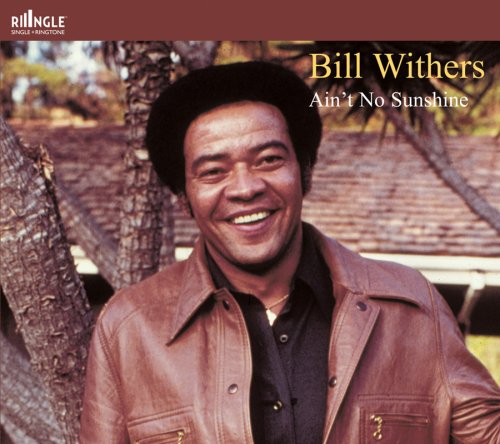
Listen to a verse and chorus of "Ain't No Sunshine" by Bill Withers and answer the questions contained in the form below, once complete please click SUBMIT. Thank you..
Wednesday, 23 March 2011
Bass lines
Greetings! Below is the task sheet for creating and adding basslines to the tracks you are working on.
Read the sheet and follow the instructions. Enjoy!
Creating Basslines
Read the sheet and follow the instructions. Enjoy!
Creating Basslines
Tuesday, 8 March 2011
Adding Harmony parts to your compositions
Here is part one in a series looking at how to develop your compositions harmonically. This first video looks at diatonic (within the key) harmony in the keys of C major and A minor.
Do let me know how you get on with this and if there are any amendments necessary to make these as easy as possible to follow...your help is much appreciated.
Do let me know how you get on with this and if there are any amendments necessary to make these as easy as possible to follow...your help is much appreciated.
Developing the beat...1/16th note grooves
These two videos take the 1/8th note grooves a bit further and explore adding notes in the piano roll editor. They also look at adding syncopated funky snare and kick hits and more complex HiHat patterns..
These videos also look at some more in depth ways of entering notes using "step time" input as well as the "real time" note entry that was used in the 1/8th note grooves.
These videos also look at some more in depth ways of entering notes using "step time" input as well as the "real time" note entry that was used in the 1/8th note grooves.
1/8th note rock grooves
Hi People
 Welcome to the new blog...to kick off here is the first video to help provide some guidance on creating 1/8th note (quaver) drum grooves in Garageband. The video here gives an introduction to creating basic one bar grooves using kick, snare and Hihats. Enjoy!
Subscribe to:
Comments (Atom)